

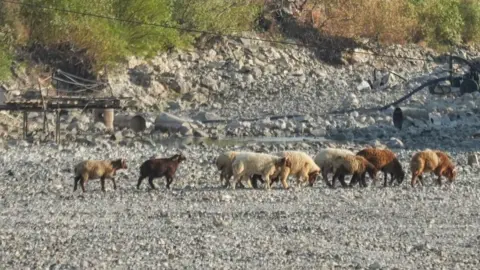
Close to the countryside by central Syria, farmland are expected to be ripe and full with harvest.
Yet, Maher Haddad's land remains unproductive, producing just a portion of its typical harvest.
"Recently has been devastating because of the drought," explained the middle-aged grower.
His land generated only 190kg per unit—well under the typical amount seen in a normal period.
"{We lost what we put in; we've lost money. It's impossible to fund next year's crops," he added.
Having two young children to provide for, the farmer is relying on funds from relatives to survive.
Widespread Situation
This hardship is seen throughout the nation, where the worst rain shortage in over three decades has slashed wheat harvests by a significant portion.
An estimated deficit of 2.73 million tonnes looms this year—representing the yearly food requirements of millions of people.

Increasing Hunger
Without more assistance or the ability to bring in supplies, the situation may deteriorate significantly.
More than 14 million residents—about six in ten the population—already find it hard to meet their nutritional needs.
Among them, 9.1 million experience serious food shortage, including a significant number in dire situations.
Precipitation has decreased by about 70%, devastating three-quarters of non-irrigated farmland.
"This is the line between people remaining in their villages or needing to move," noted an expert.
Daily Challenges
Rural households are parting with herds to compensate for diminished incomes, limiting their meals.
Hunger-related issues rates among young ones and women are growing.
Crops is a basic crop in Syria, essential for bread and traditional dishes—cheap foods that are now becoming more expensive in price.
For a widow aged thirty-nine, purchasing bread has become increasingly challenging.
With several kids, she depends on her children' income, which fall short of daily needs.
"Occasionally we need to get cash just to buy bread," she said.
Previously, a portion of flatbread was priced at five hundred local currency, but now it is 4,500.
To feed her household, she requires multiple portions a daily—an expense of nine thousand currency units, excluding other items.
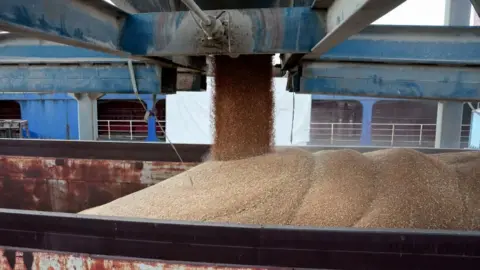
Government and Foreign Actions
This crisis creates a major problem for the administration, which is striving to restore the country after over a decade of conflict.
Aid groups are providing food support for those at risk, but representatives warn that these are temporary fixes.
"We're trying to enable people in the farming field," stated a official.
Monetary assistance have been given to local growers who suffered the whole yield.
Yet, after a long time of war, Syria's agricultural industry was already impacted by economic collapse, destroyed water systems, and unsafe fields.
Irrigation Crisis
In vital farming zones, wheat fields require multiple watering cycles per season, but as a result of shortage of precipitation, most farmers find it impossible to keep up.
"A agricultural worker's first concern is securing irrigation," said a area official.
Water requires energy, and fuel prices have risen significantly, hitting eleven thousand to twelve thousand currency per unit.
High fuel prices and ongoing outages have rendered water pumps unaffordable for numerous agriculturalists.
Sustainable Solutions
One focus for the authorities is investing in irrigation infrastructure—like eco-friendly irrigation systems—to provide water more available.
Yet these initiatives take time and resources—advantages that growers cannot access currently.
Therefore, for millions people around the country, there is just one thing to rely on in the upcoming period: pray for rain.
